One Step at a Time: Teresa Wicks Climb to Climate Advocacy
By: Haley Yarborough
When Teresa Wicks was diagnosed with breast cancer in 2009, she joined a club no one asks to be part of. Like many cancer patients, she survived treatment—but survival came with questions that lingered long after surgery and chemotherapy ended. Why did this happen? What factors shaped her risk? And how many of those factors were beyond individual control? Those questions changed the way Wicks, a registered nurse and lifelong Montanan, understood health. “Like a lot of cancer patients, you start looking closely at your environment,” she said. “You ask yourself what you could have done differently.” For Wicks, those reflections came not only from fear, but from experience. By the time she was diagnosed, she had already spent decades working across Montana’s healthcare system—in large hospitals, rural clinics, community health settings, and classrooms. Nursing, she said, had always taught her to look beyond symptoms to context. “We’re trained to look at the whole patient,” she said. “And environment has always been part of that.”
In recent years, a growing body of research has explored how environmental exposures tied to climate change may influence breast cancer risk. For example, a large multi-ethnic U.S. cohort study found that long-term exposure to fine particulate matter (PM₂.₅), a key component of air pollution linked to wildfire smoke and fossil fuel emissions, was associated with higher breast cancer incidence: for every 10 µg/m³ increase in PM₂.₅ exposure, breast cancer risk rose significantly. These findings suggest that air quality—shaped in part by climate-related factors like wildfire smoke—influences cancer risk alongside other well-known contributors such as reproductive history and lifestyle As she recovered, Wicks began paying closer attention to air quality, chemical exposure, and the long-term health impacts of pollution—especially for women and children. Her background in women’s health made the connections hard to ignore. Research linking air pollution to pregnancy complications, miscarriage, and newborn health echoed what she had seen throughout her career. What affects a pregnant person, she noted, doesn’t stop there. It shapes the health of the child long after birth.
Recovery also brought movement back into her life. About a year after finishing treatment, Wicks’ husband suggested she start biking again. At first, she was hesitant. But slowly, riding became a way to rebuild strength and clarity. Today, she rides a brightly colored cruiser bike with a basket, not chasing distance or speed, but freedom. “It gave me the mental boost I needed,” she said. “And it made me think more about what kind of communities we’re creating.” That question, what kind of communities support health, eventually led Wicks to Montana Health Professionals for a Healthy Climate and to the annual Ride for Their Lives in Billings. The ride raises awareness about how climate change affects children’s health, from wildfire smoke to declining air quality and rising respiratory illness. Billings, where Wicks was born and raised, sits near multiple refineries and experiences increasingly severe wildfire smoke each summer. While she is careful not to point blame, she emphasizes the importance of paying attention—especially when it comes to children. “We’re seeing higher rates of childhood respiratory issues,” she said. “We have to ask whether it’s okay to send kids outside to play on certain days.” Wildfire smoke has reshaped daily life across Montana. Wicks recalls canceled outdoor dinners, missed hikes, and family visits postponed due to hazardous air. What once felt occasional now defines entire summers. “You plan around smoke now,” she said.
Before retiring in 2024, Wicks also spent years teaching nursing students at Montana State University’s Billings campus. In community health and psychosocial nursing courses, she watched students grow more curious about environmental health. Over time, more began asking how climate change was showing up in clinics, hospitals, and mental health outcomes. “That awareness is building,” she said. “It’s slow, but it’s real.” Becoming a grandmother has only deepened her concern—and her hope. Watching her daughter raise a child with greater attention to chemicals, plastics, and food systems has reinforced Wicks’ belief that change happens across generations. For her, climate advocacy isn’t about alarm. It’s about care. Paying attention. Making choices where possible. Talking honestly about risk. And sometimes, getting on a bike. “One step at a time,” Wicks said. “That’s how we move forward.”
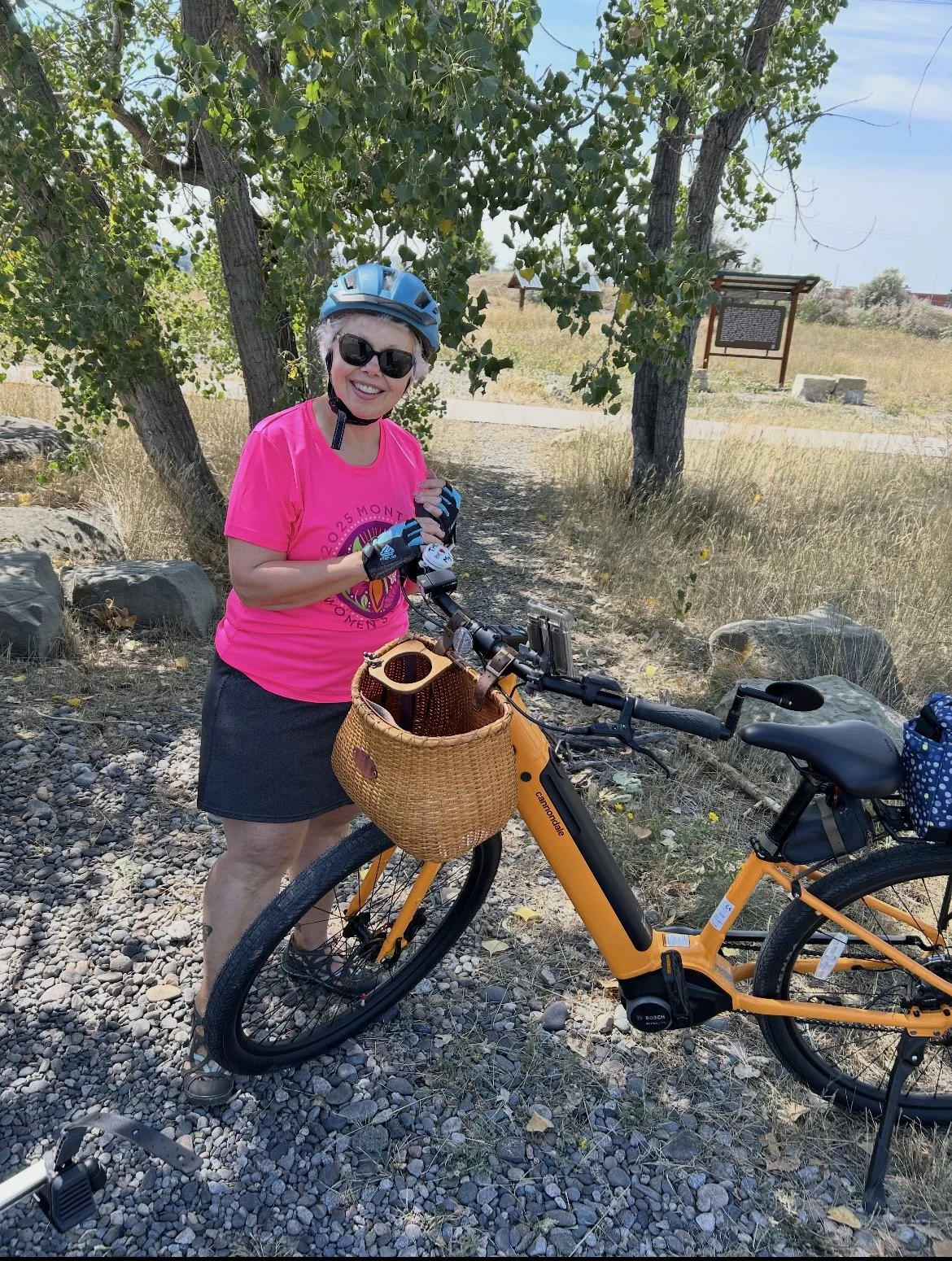
Teresa Wicks out riding her bicycle
About the Author:
Haley Yarborough is University of Montana Master's Student studying Environmental Writing in Missoula, Montana. She is also an intern for Montana Health Professionals for a Healthy Climate, a nonprofit dedicated to telling stories about the intersection between health and climate. Haley enjoys trail running, baking, and writing creative fiction on her free time.