Teaching the Next Generation to Care from Home
Written by Haley Yarborough
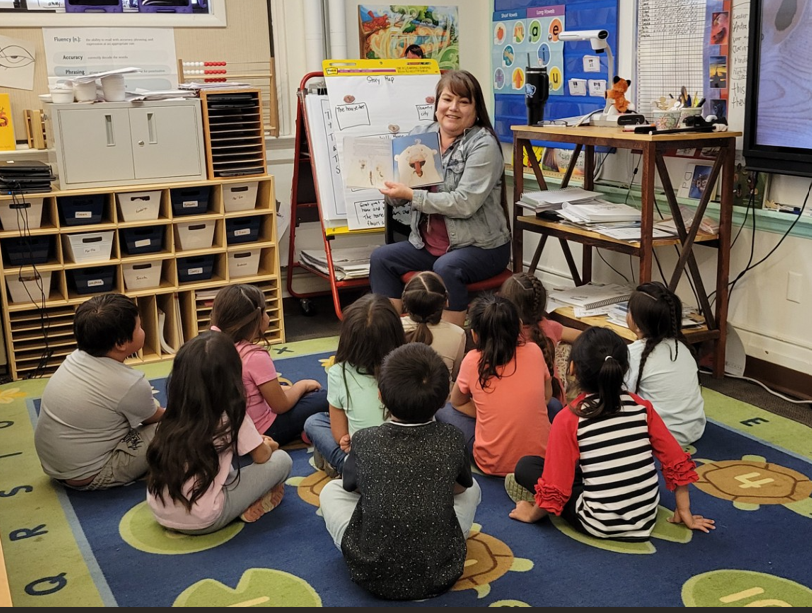
For nearly 23 years, Jonna Chavez has taught children on the Crow Indian Reservation. After years in third grade, serving as a dean of students, and now returning to kindergarten, she has learned that education begins with relationships. "I know the families," Chavez said. "I was born and raised here. I've even taught a grandmother."
A member of the Crow, Northern Cheyenne and Sioux communities, Chavez has spent her career in the same community that raised her. That deep connection shapes everything she brings into the classroom, including lessons about environmental health. Growing up, Chavez dreamed of studying biology and marine science at Humboldt University in California. Although life took her in a different direction, her love of nature never disappeared. Instead, it found a home in education. "I realized once I started teaching, this is exactly where I need to be," she said.
That perspective made Environmental Health in a Box, a program that provides books and hands-on activities about climate and environmental health, a natural fit for her kindergarten classroom. The lessons introduce students to topics such as clean water, healthy ecosystems and the connections between the environment and human well-being at an early age.
For Chavez, those conversations are especially meaningful because they reflect values already embedded within Crow culture. "We live here," she said. "This is our home." Helping children understand how environmental changes affect the places they know, from local water to the land surrounding their communities, gives those lessons immediate relevance. Rather than presenting climate change as a distant issue, the program encourages students to think about the world outside their classroom doors. Just as important, Chavez believes that young children are eager to learn when given meaningful opportunities. "My expectations are so high," she said. "The kids just rise to those expectations all the time. It's so amazing to see that growth."
Throughout her career, Chavez has witnessed the challenges many students and families face. She said consistency and trust are often just as important as academics, particularly for young children. "Sometimes you're the most stable person in their life because you're there every day," she said. That steady presence extends beyond reading and math lessons. By introducing environmental health concepts early, Chavez hopes students develop a lifelong appreciation for the land and understand that caring for their communities also means caring for the environment.
Education has always been central to Chavez's family. Raised among a large extended family where earning a college degree was an expectation, she later returned to school herself after starting a family, determined to model perseverance and independence for her children. Today, that commitment continues through the next generation. Her daughter, Madisan Chavez, recently earned a master's degree in environmental science and helped bring Environmental Health in a Box to schools serving Native students across Montana. “I think it’s just important to bring awareness to these issues,” Madisan Chavez said. “...I think it’s important ot be aware of these issues around the world, and in our own backyard.” Together, their work reflects a shared belief: when students see the connection between healthy communities and a healthy environment, they are better prepared to protect both for generations to come.